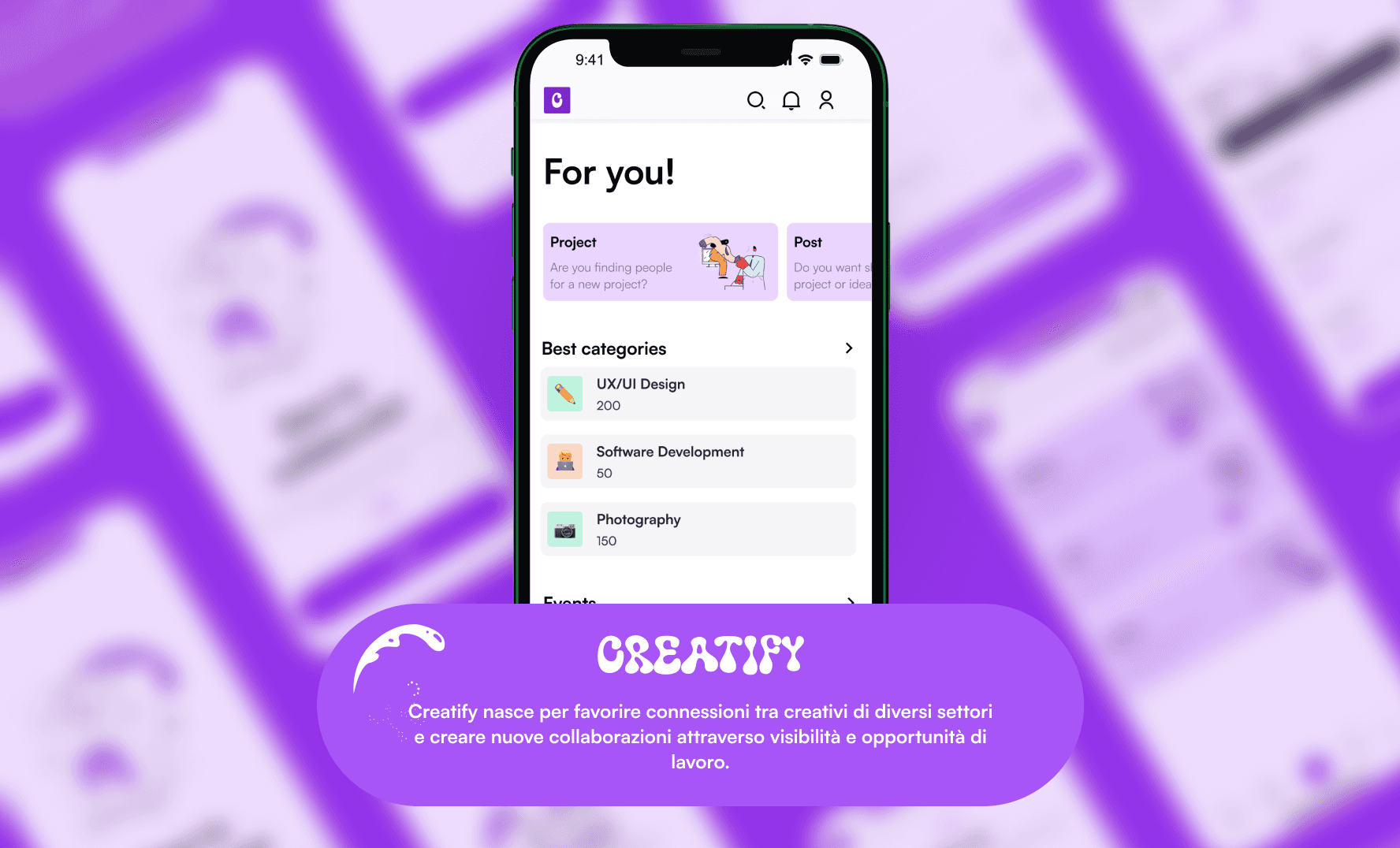
A new social hub for creative talents that brings together innovators from all disciplines. A vibrant space designed to connect, inspire, and amplify creative voices
Core responsabilities:
2025 - 3 months
Core responsabilities:
Research, Branding, Design System, Product Design
Output:
App mobile
PROJECT OVERVIEW
In an increasingly interconnected and dynamic creative world, the need emerges for a digital space that brings together talent, skills, and work opportunities into a single fluid and accessible hub.
Creatives often work in isolation, managing many aspects on their own (finding contacts, promoting their portfolio, networking, identifying collaborators). At the same time, many entities freelancers, startups, agencies, companies struggle to easily find specific roles or assemble ad-hoc teams for temporary or experimental projects.
Creatify aims to fill this gap by offering:
• A digital space: where you can effectively showcase your portfolio and skills;
• Search and matching system: that accelerates the meeting of creative supply and demand;
• Collaborative environment: where multiple professionals can come together around an idea, complementing each other’s skills.
GOL & APPROACH
The app is designed to meet two main needs: on one hand, to allow creatives to publish their work, showcase themselves to the world, and be discovered; on the other hand, to enable those who have a project or an idea to find professionals and talents to collaborate with and complete the work.
Starting with creating a simple navigation for intuitive use, ensuring easy access to job offer and matching experiences and skill between freelance with different career and company who search people tu start a project. Then giving a modern look to the app's design align with market trend and standards, enhancing visual appeal and usabilityModernize the website's design to align with industry standards, enhancing visual appeal and usability.
GOL & APPROACH
The app is designed to meet two main needs: on one hand, to allow creatives to publish their work, showcase themselves to the world, and be discovered; on the other hand, to enable those who have a project or an idea to find professionals and talents to collaborate with and complete the work.
Starting with creating a simple navigation for intuitive use, ensuring easy access to job offer and matching experiences and skill between freelance with different career and company who search people tu start a project. Then giving a modern look to the app's design align with market trend and standards, enhancing visual appeal and usabilityModernize the website's design to align with industry standards, enhancing visual appeal and usability.
SOLUTION
Starting from a clear navigation
After establishing the desired user experience, I restructured the page hierarchy and overall flow, designing a user-centric navigation system with intuitively organized menus and content.
Since the app addresses the core needs of connecting users with freelance collaborators and discovering projects to actively participate in, I prioritized these two key functions by placing them in the primary bottom navigation bar for immediate access.
Secondary features such as webinars, courses, and informational pages including privacy policy and legal terms were organized within the side menu, ensuring that supplementary content is easily reachable without competing for attention in the main navigation.
Building the branding, foundation and a scalable design system for actual and future improvement of the product
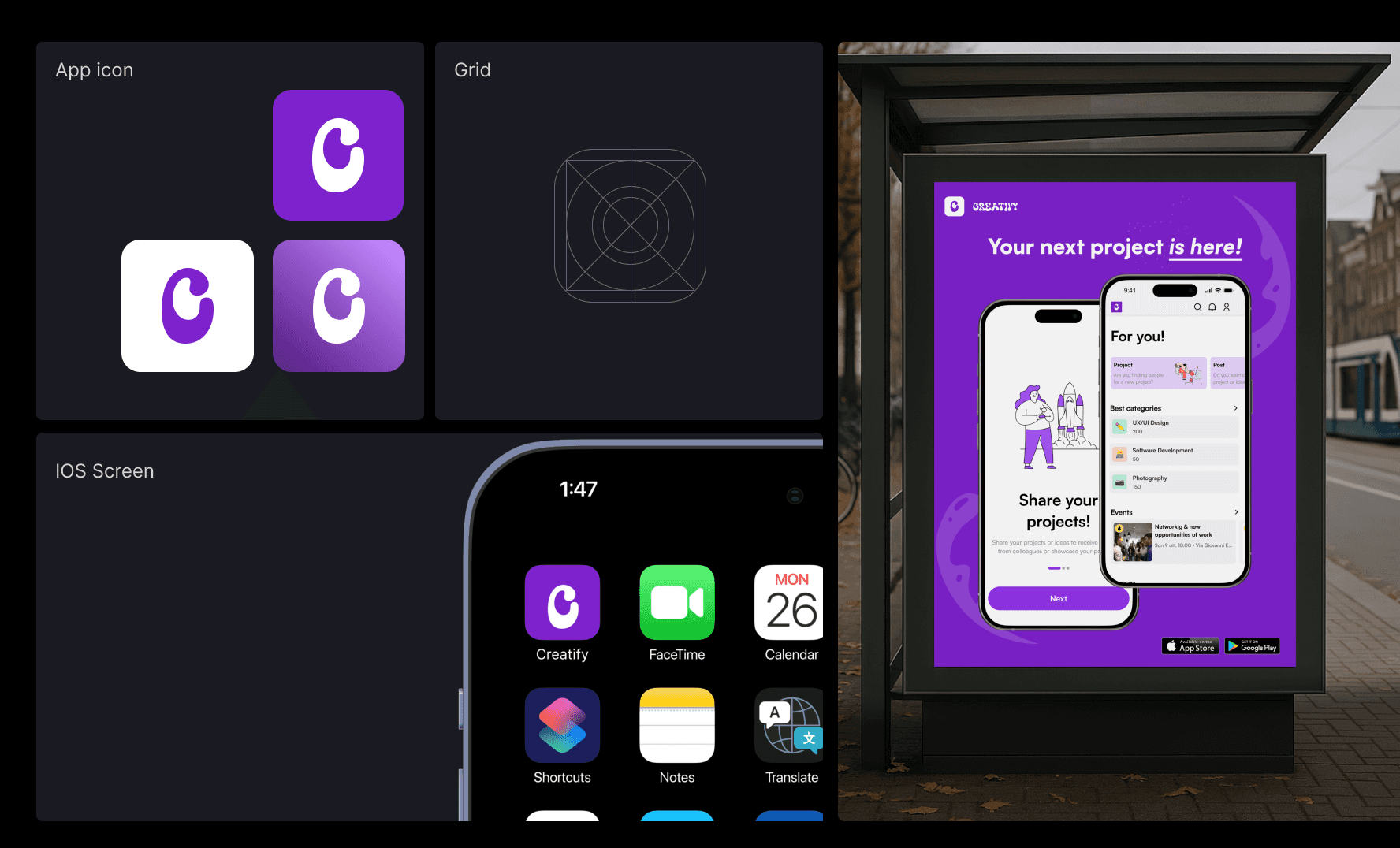
The first step was to conceive the visual identity: not merely a logo or color palette, but a coherent visual language that clearly communicates the app’s mission creating connections between talent and projects. I built a brand image that reflects creativity, accessibility, and professionalism. This included defining typography, color palette, visual tone, main iconography, and image style, so that every screen and every user‑interface component responds to a strong and recognizable identity.
Find the perfect specialist for your project in just some clicks
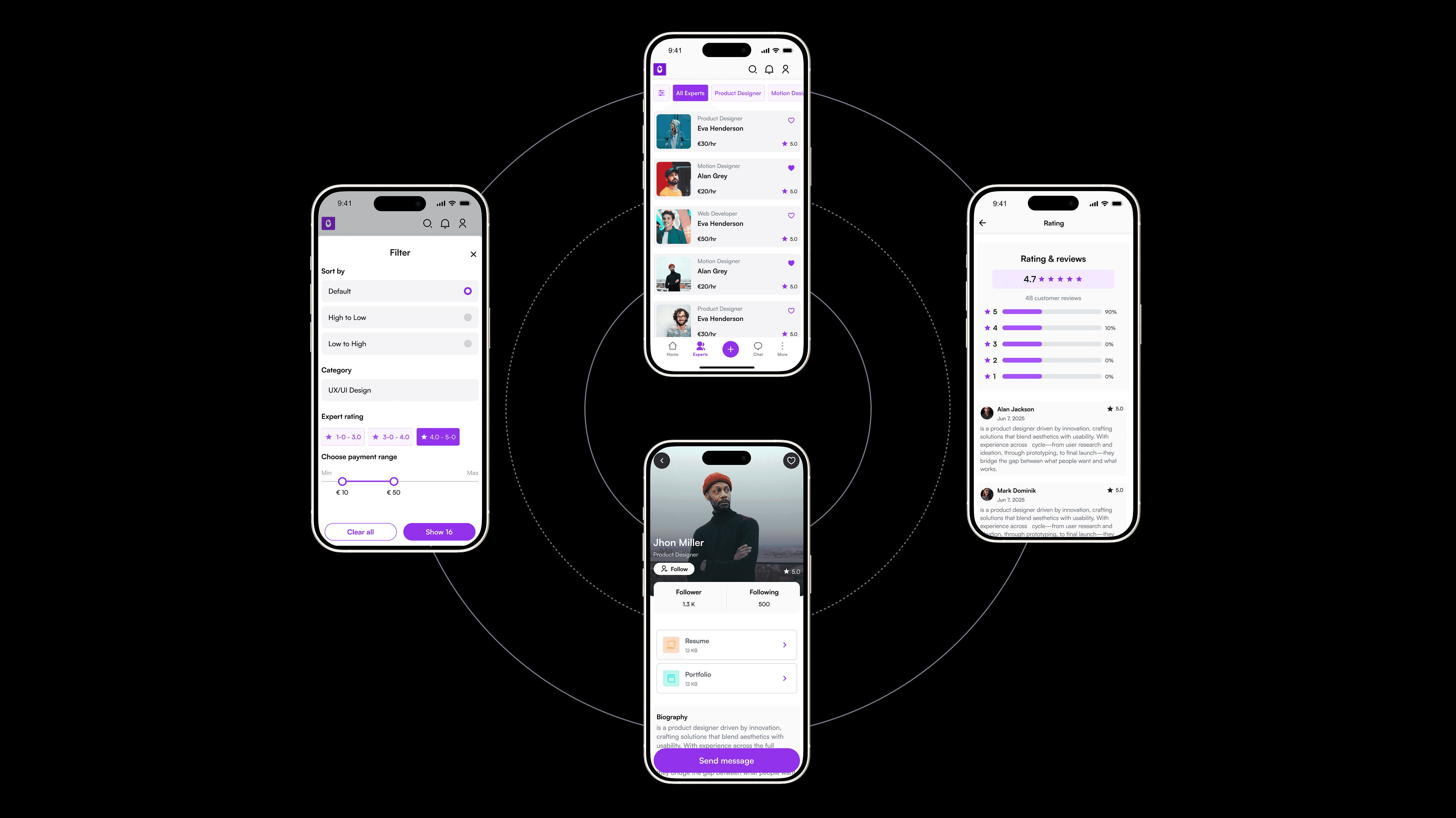
One of the core value propositions of the app is the ability to help users find the perfect specialist for their project in just a few clicks. To realize this promise, I designed a streamlined, intuitive flow: after a brief profile setup or project brief, users can immediately access a curated selection of talent filtered by skillset, availability, and creative discipline. Dynamic filters and an optimized interface minimise search effort, enabling users to identify the right collaborator with ease. This approach not only accelerates the match between creative professionals and projects, but also builds trust by offering clarity, control, and quality from the very first interaction.
The next step after establishing the brand identity was to design and implement a structured Design System, engineered to support the project’s scalabilty and facilitate future developments outlined in the roadmap.
Using Figma, I applied a methodology based on variables, design tokens, and property-driven styles to ensure consistency, modularity, and reusability of UI patterns. This approach enables future collaborators to work within a clear, well-defined set of guidelines, minimizing ambiguity and streamlining workflow.
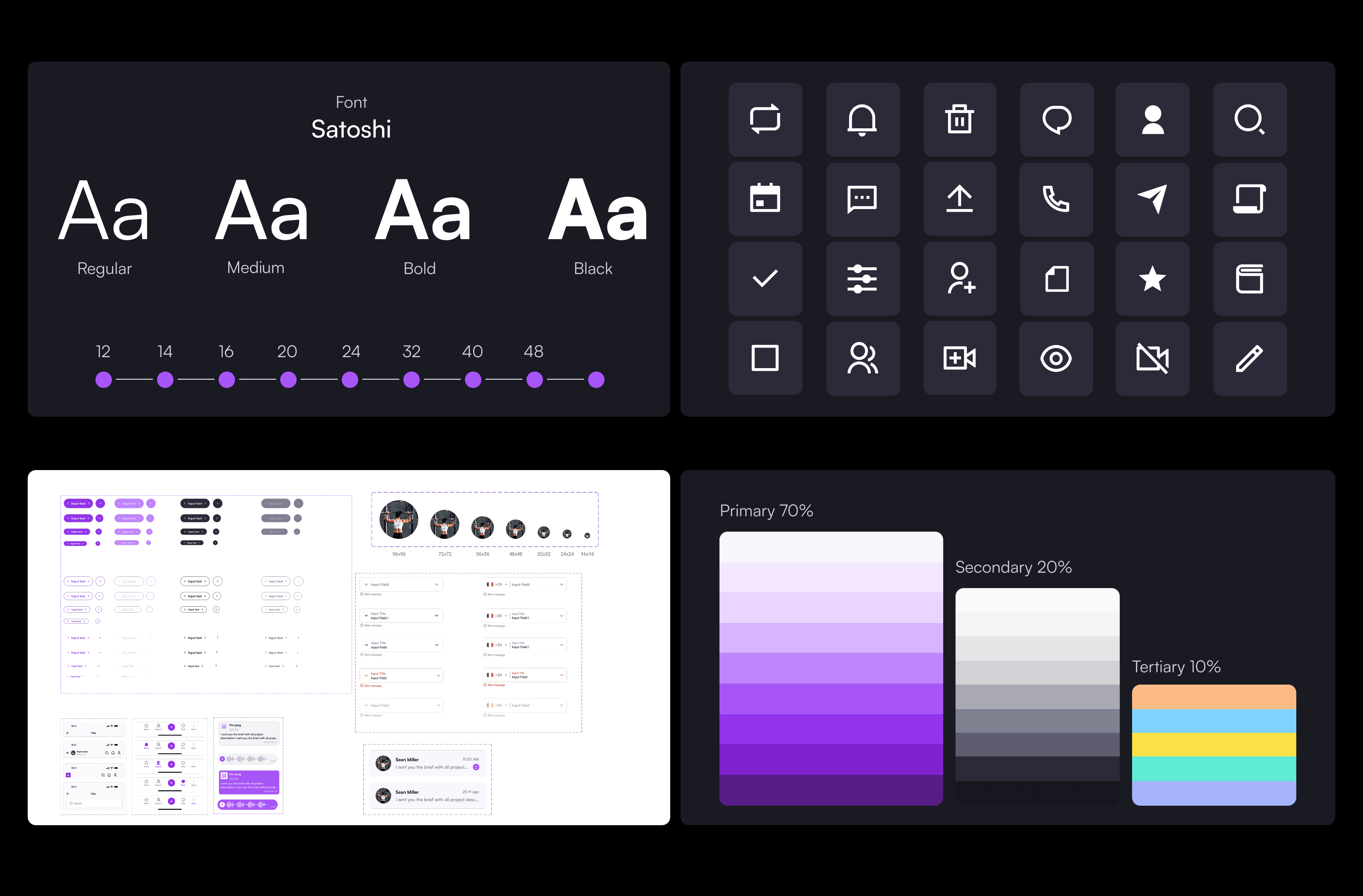
After defining the foundational elements including the typography system (font stacks) and color palette I moved on to the construction of components, organized by increasing complexity: icons, buttons, badges, input fields and form elements.
The system is architected to promote high maintainability, ease of extension, and seamless integration with the future functional modules planned in the backlog.
Istant information exchange for solving faster all problems
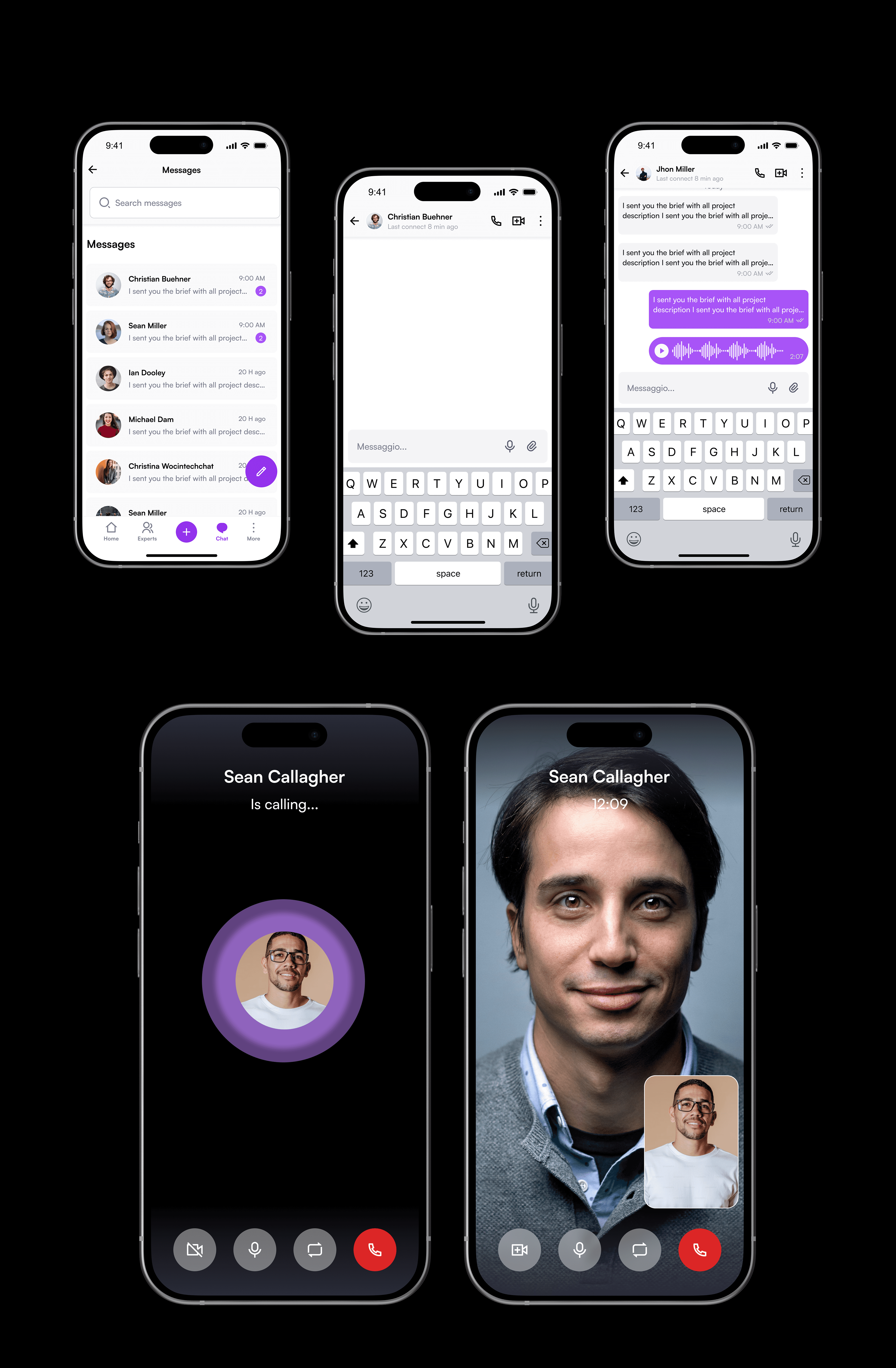
With Creatify, communication between professionals becomes truly instant and seamless: you can send chat messages for quick updates, jump on a video call for face-to-face discussions, or leave voice notes when you want to explain complex ideas without typing. This powerful combination removes the delays of emails and formal meetings, enabling real-time responses, faster problem-solving, and quicker, more informed decisions. Collaboration feels natural, efficient, and instantly connected.
Profile management
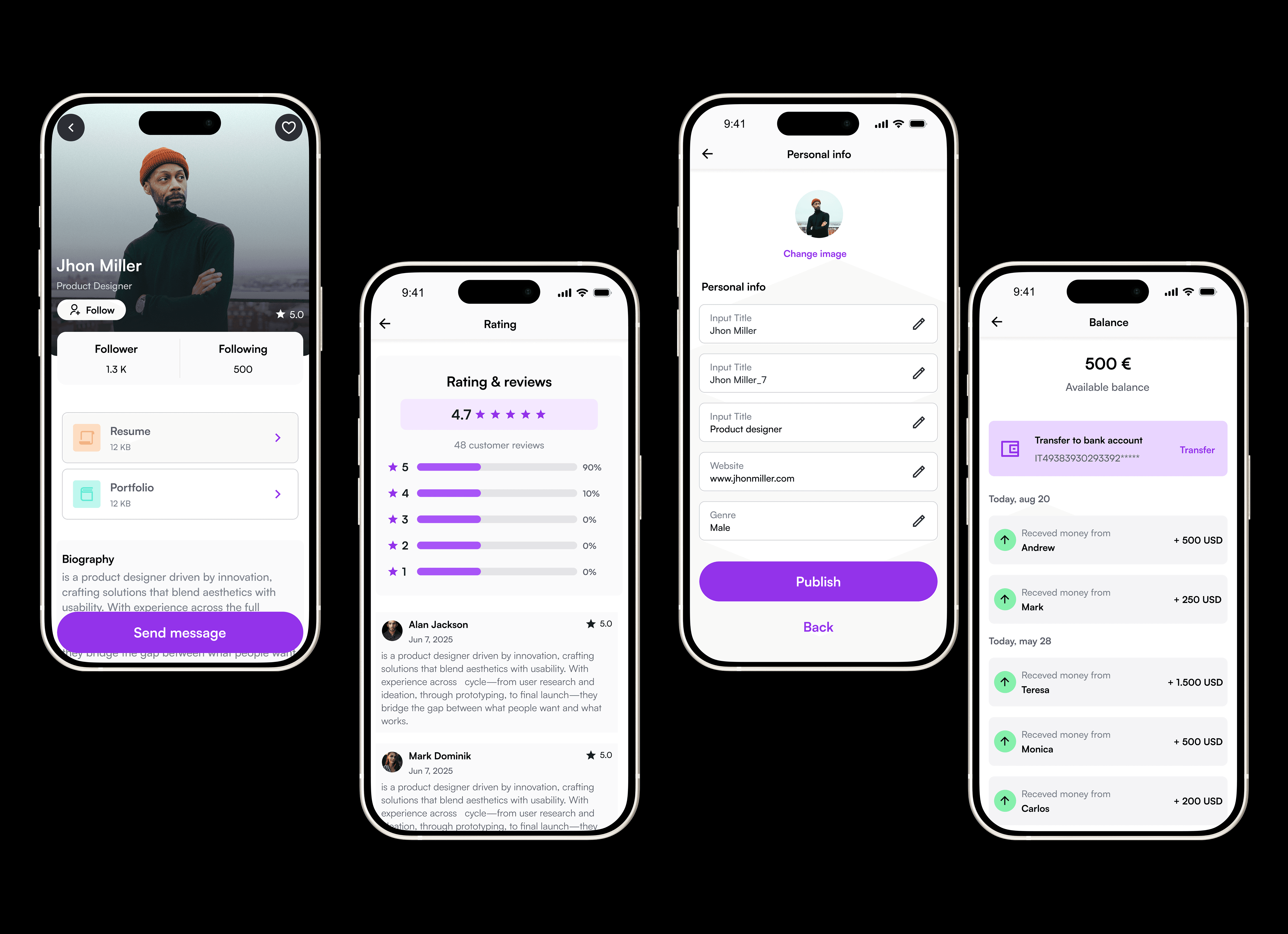
This interface allows the user to update their personal information (first name, last name, email, phone number, address, etc.). It is designed with a clear form that includes real-time validation to prevent errors (e.g., invalid email, required fields), and offers feedback messages (microcopy) that guide the user in case of error or to confirm the save. There can also be a section to manage privacy preferences or profile visibility, so the user has full control over their data. From a UX standpoint, the interface is meant to be secure, reassuring, and transparent in how personal data is used.

GOL & APPROACH
The app is designed to meet two main needs: on one hand, to allow creatives to publish their work, showcase themselves to the world, and be discovered; on the other hand, to enable those who have a project or an idea to find professionals and talents to collaborate with and complete the work.
Starting with creating a simple navigation for intuitive use, ensuring easy access to job offer and matching experiences and skill between freelance with different career and company who search people tu start a project. Then giving a modern look to the app's design align with market trend and standards, enhancing visual appeal and usabilityModernize the website's design to align with industry standards, enhancing visual appeal and usability.
Building the branding, foundation and a scalable design system for actual and future improvement of the product
The first step was to conceive the visual identity: not merely a logo or color palette, but a coherent visual language that clearly communicates the app’s mission creating connections between talent and projects. I built a brand image that reflects creativity, accessibility, and professionalism. This included defining typography, color palette, visual tone, main iconography, and image style, so that every screen and every user‑interface component responds to a strong and recognizable identity..
Find the perfect specialist for your project in just some clicks
One of the core value propositions of the app is the ability to help users find the perfect specialist for their project in just a few clicks. To realize this promise, I designed a streamlined, intuitive flow: after a brief profile setup or project brief, users can immediately access a curated selection of talent filtered by skillset, availability, and creative discipline. Dynamic filters and an optimized interface minimise search effort, enabling users to identify the right collaborator with ease. This approach not only accelerates the match between creative professionals and projects, but also builds trust by offering clarity, control, and quality from the very first interaction.
Istant information exchange for solving faster all problems
With Creatify, communication between professionals becomes truly instant and seamless: you can send chat messages for quick updates, jump on a video call for face-to-face discussions, or leave voice notes when you want to explain complex ideas without typing. This powerful combination removes the delays of emails and formal meetings, enabling real-time responses, faster problem-solving, and quicker, more informed decisions. Collaboration feels natural, efficient, and instantly connected.
Profile management
This interface allows the user to update their personal information (first name, last name, email, phone number, address, etc.). It is designed with a clear form that includes real-time validation to prevent errors (e.g., invalid email, required fields), and offers feedback messages (microcopy) that guide the user in case of error or to confirm the save. There can also be a section to manage privacy preferences or profile visibility, so the user has full control over their data. From a UX standpoint, the interface is meant to be secure, reassuring, and transparent in how personal data is used.
The next step after establishing the brand identity was to design and implement a structured Design System, engineered to support the project’s scalabilty and facilitate future developments outlined in the roadmap.
Using Figma, I applied a methodology based on variables, design tokens, and property-driven styles to ensure consistency, modularity, and reusability of UI patterns. This approach enables future collaborators to work within a clear, well-defined set of guidelines, minimizing ambiguity and streamlining workflow.
After defining the foundational elements including the typography system (font stacks) and color palette I moved on to the construction of components, organized by increasing complexity: icons, buttons, badges, input fields and form elements.
The system is architected to promote high maintainability, ease of extension, and seamless integration with the future functional modules planned in the backlog.
SOLUTION
Starting from a clear navigation
After establishing the desired user experience, I restructured the page hierarchy and overall flow, designing a user-centric navigation system with intuitively organized menus and content.
Since the app addresses the core needs of connecting users with freelance collaborators and discovering projects to actively participate in, I prioritized these two key functions by placing them in the primary bottom navigation bar for immediate access.
Secondary features such as webinars, courses, and informational pages including privacy policy and legal terms were organized within the side menu, ensuring that supplementary content is easily reachable without competing for attention in the main navigation.
SOLUTION
Starting from a clear navigation
After establishing the desired user experience, I restructured the page hierarchy and overall flow, designing a user-centric navigation system with intuitively organized menus and content.
Since the app addresses the core needs of connecting users with freelance collaborators and discovering projects to actively participate in, I prioritized these two key functions by placing them in the primary bottom navigation bar for immediate access.
Secondary features such as webinars, courses, and informational pages including privacy policy and legal terms were organized within the side menu, ensuring that supplementary content is easily reachable without competing for attention in the main navigation.
Building the branding, foundation and a scalable design system for actual and future improvement of the product
The first step was to conceive the visual identity: not merely a logo or color palette, but a coherent visual language that clearly communicates the app’s mission creating connections between talent and projects. I built a brand image that reflects creativity, accessibility, and professionalism. This included defining typography, color palette, visual tone, main iconography, and image style, so that every screen and every user‑interface component responds to a strong and recognizable identity.
The next step after establishing the brand identity was to design and implement a structured Design System, engineered to support the project’s scalabilty and facilitate future developments outlined in the roadmap.
Using Figma, I applied a methodology based on variables, design tokens, and property-driven styles to ensure consistency, modularity, and reusability of UI patterns. This approach enables future collaborators to work within a clear, well-defined set of guidelines, minimizing ambiguity and streamlining workflow.
After defining the foundational elements including the typography system (font stacks) and color palette I moved on to the construction of components, organized by increasing complexity: icons, buttons, badges, input fields and form elements.
The system is architected to promote high maintainability, ease of extension, and seamless integration with the future functional modules planned in the backlog.
GOL & APPROACH
The app is designed to meet two main needs: on one hand, to allow creatives to publish their work, showcase themselves to the world, and be discovered; on the other hand, to enable those who have a project or an idea to find professionals and talents to collaborate with and complete the work.
Starting with creating a simple navigation for intuitive use, ensuring easy access to job offer and matching experiences and skill between freelance with different career and company who search people tu start a project. Then giving a modern look to the app's design align with market trend and standards, enhancing visual appeal and usabilityModernize the website's design to align with industry standards, enhancing visual appeal and usability.
Building the branding, foundation and a scalable design system for actual and future improvement of the product
The first step was to conceive the visual identity: not merely a logo or color palette, but a coherent visual language that clearly communicates the app’s mission creating connections between talent and projects. I built a brand image that reflects creativity, accessibility, and professionalism. This included defining typography, color palette, visual tone, main iconography, and image style, so that every screen and every user‑interface component responds to a strong and recognizable identity.
Find the perfect specialist for your project in just some clicks
One of the core value propositions of the app is the ability to help users find the perfect specialist for their project in just a few clicks. To realize this promise, I designed a streamlined, intuitive flow: after a brief profile setup or project brief, users can immediately access a curated selection of talent filtered by skillset, availability, and creative discipline. Dynamic filters and an optimized interface minimise search effort, enabling users to identify the right collaborator with ease. This approach not only accelerates the match between creative professionals and projects, but also builds trust by offering clarity, control, and quality from the very first interaction.
Istant information exchange for solving faster all problems
With Creatify, communication between professionals becomes truly instant and seamless: you can send chat messages for quick updates, jump on a video call for face-to-face discussions, or leave voice notes when you want to explain complex ideas without typing. This powerful combination removes the delays of emails and formal meetings, enabling real-time responses, faster problem-solving, and quicker, more informed decisions. Collaboration feels natural, efficient, and instantly connected.
The next step after establishing the brand identity was to design and implement a structured Design System, engineered to support the project’s scalabilty and facilitate future developments outlined in the roadmap.
Using Figma, I applied a methodology based on variables, design tokens, and property-driven styles to ensure consistency, modularity, and reusability of UI patterns. This approach enables future collaborators to work within a clear, well-defined set of guidelines, minimizing ambiguity and streamlining workflow.
After defining the foundational elements including the typography system (font stacks) and color palette I moved on to the construction of components, organized by increasing complexity: icons, buttons, badges, input fields and form elements.
The system is architected to promote high maintainability, ease of extension, and seamless integration with the future functional modules planned in the backlog.
SOLUTION
Starting from a clear navigation
After establishing the desired user experience, I restructured the page hierarchy and overall flow, designing a user-centric navigation system with intuitively organized menus and content.
Since the app addresses the core needs of connecting users with freelance collaborators and discovering projects to actively participate in, I prioritized these two key functions by placing them in the primary bottom navigation bar for immediate access.
Secondary features such as webinars, courses, and informational pages including privacy policy and legal terms were organized within the side menu, ensuring that supplementary content is easily reachable without competing for attention in the main navigation.
Find the perfect specialist for your project in just some clicks
One of the core value propositions of the app is the ability to help users find the perfect specialist for their project in just a few clicks. To realize this promise, I designed a streamlined, intuitive flow: after a brief profile setup or project brief, users can immediately access a curated selection of talent filtered by skillset, availability, and creative discipline. Dynamic filters and an optimized interface minimise search effort, enabling users to identify the right collaborator with ease. This approach not only accelerates the match between creative professionals and projects, but also builds trust by offering clarity, control, and quality from the very first interaction.
Istant information exchange for solving faster all problems
With Creatify, communication between professionals becomes truly instant and seamless: you can send chat messages for quick updates, jump on a video call for face-to-face discussions, or leave voice notes when you want to explain complex ideas without typing. This powerful combination removes the delays of emails and formal meetings, enabling real-time responses, faster problem-solving, and quicker, more informed decisions. Collaboration feels natural, efficient, and instantly connected.
Profile management
This interface allows the user to update their personal information (first name, last name, email, phone number, address, etc.). It is designed with a clear form that includes real-time validation to prevent errors (e.g., invalid email, required fields), and offers feedback messages (microcopy) that guide the user in case of error or to confirm the save. There can also be a section to manage privacy preferences or profile visibility, so the user has full control over their data. From a UX standpoint, the interface is meant to be secure, reassuring, and transparent in how personal data is used.
Profile management
This interface allows the user to update their personal information (first name, last name, email, phone number, address, etc.). It is designed with a clear form that includes real-time validation to prevent errors (e.g., invalid email, required fields), and offers feedback messages (microcopy) that guide the user in case of error or to confirm the save. There can also be a section to manage privacy preferences or profile visibility, so the user has full control over their data. From a UX standpoint, the interface is meant to be secure, reassuring, and transparent in how personal data is used.
Next Works


A new social hub for creative talents that brings together innovators from all disciplines. A vibrant space designed to connect, inspire, and amplify creative voices
Year:
2025 - 3 months
Core responsabilities:
Research, Branding, Design System, Product Design
Output:
App mobile
PROJECT OVERVIEW
In an increasingly interconnected and dynamic creative world, the need emerges for a digital space that brings together talent, skills, and work opportunities into a single fluid and accessible hub.
Creatives often work in isolation, managing many aspects on their own (finding contacts, promoting their portfolio, networking, identifying collaborators). At the same time, many entities freelancers, startups, agencies, companies struggle to easily find specific roles or assemble ad-hoc teams for temporary or experimental projects.
Creatify aims to fill this gap by offering:
• A digital space: where you can effectively showcase your portfolio and skills;
• Search and matching system: that accelerates the meeting of creative supply and demand;
• Collaborative environment: where multiple professionals can come together around an idea, complementing each other’s skills.
A new social hub for creative talents that brings together innovators from all disciplines. A vibrant space designed to connect, inspire, and amplify creative voices
Year:
2025 - 3 months
Core responsabilities:
Research, Branding, Design System, Product Design
Output:
App mobile
PROJECT OVERVIEW
In an increasingly interconnected and dynamic creative world, the need emerges for a digital space that brings together talent, skills, and work opportunities into a single fluid and accessible hub.
Creatives often work in isolation, managing many aspects on their own (finding contacts, promoting their portfolio, networking, identifying collaborators). At the same time, many entities freelancers, startups, agencies, companies struggle to easily find specific roles or assemble ad-hoc teams for temporary or experimental projects.
Creatify aims to fill this gap by offering:
• A digital space: where you can effectively showcase your portfolio and skills;
• Search and matching system: that accelerates the meeting of creative supply and demand;
• Collaborative environment: where multiple professionals can come together around an idea, complementing each other’s skills.
A new social hub for creative talents that brings together innovators from all disciplines. A vibrant space designed to connect, inspire, and amplify creative voices
Year:
2025 - 3 months
Core responsabilities:
Research, Branding, Design System, Product Design
Output:
App mobile
PROJECT OVERVIEW
In an increasingly interconnected and dynamic creative world, the need emerges for a digital space that brings together talent, skills, and work opportunities into a single fluid and accessible hub.
Creatives often work in isolation, managing many aspects on their own (finding contacts, promoting their portfolio, networking, identifying collaborators). At the same time, many entities freelancers, startups, agencies, companies struggle to easily find specific roles or assemble ad-hoc teams for temporary or experimental projects.
Creatify aims to fill this gap by offering:
• A digital space: where you can effectively showcase your portfolio and skills;
• Search and matching system: that accelerates the meeting of creative supply and demand;
• Collaborative environment: where multiple professionals can come together around an idea, complementing each other’s skills.